


I'm Not A Winner

The day when I can claim to have coached for twenty years is on the horizon. Not that I can count in any way, but I would reckon I have lost way more games than I have won as a coach. Yet now, I'm at a stage in my career where I am receiving praise, and appear to be fairly respected. While I do rate myself as a coach, as I know myself that my knowledge has vastly improved over the years, the outside perception is often one that doesn't align well with my own experiences. And I feel that other coaches of a similar age and on similar journeys can probably relate to this.

"I start early, and I stay late, year after year. It took me seventeen years and one hundred and fourteen days to become an overnight sensation." Lionel Messi.
The above Messi quote is one that I like very much, and have used it since I first became aware of it in 2012. Humans like simple answers to complex questions. It's why ancient religions had stories of gods controlling the sky. They didn't have answers for things that we can explain sufficiently well in primary school these days, such as thunder, eclipses, droughts, famines. We know that the average sports consumer is not necessarily a deep thinker about the game they take a passive interest in. The radio shows, chatrooms, comments sections, and workplace banter provide people with a sense of community, belonging, and shared interest. It's ready made, and the bar for entry is quite low. By not calling it "footy" and referring to your team with the correct nickname, you are accepted into a community. You meet people like you, and you belong.
Sports fans love hearing former players reminisce about the good old days. Unlike today. Things were better back then. So much simpler. We didn't have all this X. Didn't need to worry about Y. But in sport as in war, history is often written by the victor. The champion has their methods praised, the pundits attribute blame and credit in often binary terms, and the fans repeat the clichés, until the minute detail and the several factors causing the success are forgotten.
These stories persist and are passed down from generation to generation. Growing up, I thought Brian Clough was the best manager the world had ever seen. I was shocked to learn that he had only won two first division titles, one at Derby and one at Forest. I knew about the two European Cup wins, as everyone in football surely does. But the way pundits, former players, and fans spoke about Brian Clough, you'd have thought he was dominating English football with trophy after trophy for a couple of decades.

What we get are regurgitated quotes, probably fabricated in some instances, with the stories becoming wilder with each retelling. Much like how your goal from the edge of the area becomes a forty-yard screamer after several iterations at the pub. There are also standout moments from Clough, like some of his TV appearances, and his forty-four days at leads, turned into a feature length film called The Damned United.
Clough's actual trophy haul in the domestic game is similar to such contemporaries as Harry Catterick, Don Revie, Howard Kendall, and George Graham. Fine managers, many of whom you've likely heard of, but they are not spoken about in the same glowing terms as Brian Clough. As a kid, I thought he was up there with Alex Ferguson, Matt Busby, and Bob Paisley.
Is it that he is eccentric? Do these eccentricities often become mythologised? Similar to what we've seen happen to Jose Mourinho, who is credited with saying all sorts of strange things, that are either complete nonsense, or just humorous attempts to deflect and distract the media. For a player equivalent, I might consider Paul Gascoigne to have received the same treatment. In England, Gazza's only senior team honour was a singular FA Cup with Spurs in 1991. Even his time in Scotland only yielded two league titles, one SFA Cup, and one League Cup. Yet after listening to interviews about Gazza, you'd be forgiven for thinking he had won several honours at club and international level. Was it the tears? His antics? The interviews? The funny stories everyone tells about him? The goal against Scotland?

In addition to being eccentric, both Clough and Gazza are held in high regard as people, even though they may be problematic. This comes back to the sentiment of people forgetting what you do, but remembering how you made them feel, which is repeated on coaching courses. It's supposed to reiterate the idea that as coaches, even with adults, it's about community and life lessons more than it is about the winning.
Is that true? Or is it a safer bet?
Not all of us can win the league. Any team, any level, only one team can be the league champion. But we can all improve the lives of our players. A division of ten hands out one winners trophy at the end of the season, but there's another nine coaches who could all have greatly improved the lives of their players.
Is that what winning is?
In order to win, we first have to define what winning is. Do you know what it is for you? I find people that think in binary terms, like the American sentiment of "second place is first loser" will often lose in both the performance AND the humanity side of things. In my experience, the focus on winning is the thing most likely to prevent winning from happening.
Is a sprinter who finishes second, but improves their time a loser? Most people of sound mind would struggle to dismiss this person as a loser.
The Marathon Des Sables is a multi-stage ultra marathon, often billed as "the hardest foot race on Earth." Held in the Sahara Desert in Morocco, runners have to travel 155 miles over six days. They do this while carrying their food, water, sleeping gear, and other necessary equipment on their back.

Would you dare call the person who finishes such a grueling feat of human endurance a "loser?" If you would, your stupidity is as impressive as their endurance.
In football terms, we know the Championship team who is promoted with a small budget and survives a season in the Premier League will see themselves as winners. Teams like Brighton and Bournemouth making it to European competition for finishing sixth in the table, they would see that as a huge achievement. A win. Fulham getting to the final of the Europa League in 2009, defeating Juventus, Basel, Shakhtar Donetsk, CSKA Sofia, Wolfsburg, and Hamburg (in addition to a group stage draw with Roma), before losing to Atletico Madrid in the final. That is an incredible achievement, and one that is still talked about today. Yet for a club like Liverpool, it may feel underwhelming. So we know that success is relative. But who defines it?
Manchester United are a beacon of success. Known for their record breaking Premier League campaigns, dominating English football in the 1990s and 2000s. Currently, the squad keeps stalling. Unable to mount a serious title campaign, the club is becoming a joke, and for football fans like me that had to endure "Fergie time," David Beckham's haircuts, Roy Keane acting like a hardman by kicking people, surrounding referees, and only three penalties being awarded to away teams at Old Trafford between 1993 and 2004, their downfall is honestly glorious to watch. I am really enjoying it.

What pundits say about this team is that they lack winners. As far as I can tell, none of the current squad has a Premier League winner in there. These are big name players with reputations and large contracts. They've likely never heard of Jason Wilcox, and will not be impressed to learn of his career at Leeds United, Leicester City, Blackburn Rovers, and Blackpool. Since many of the current United players have been there, at least three, maybe even all four of those clubs have been outside the Premier League. Yet Jason Wilcox, the current Director of Football over at Old Trafford, has won more Premier League titles than the entire current United squad combined.
In May 2019, Liverpool finished second with a record 97 points in a Premier League season. The most points ever recorded by a team to not win the league. At that time, they would have been champions in 25 seasons since 1992, even when the league had more teams. In 2018/19 Liverpool lost only one league game, and were one point behind Man City in first place. Does this make them losers? (With those 115 charges, we may have to wait and see)
In 2024, AFC Bournemouth women went unbeaten, drawing only three games, and still missed out on promotion. It wasn't long after than they achieved 1000 minutes without conceding a goal. They did eventually get their promotion the following season, but at the time, would you have described that team as losers?
The point this serves to make here is that much of "winning" is outside of your control. You can go unbeaten, make your home ground a fortress, make your defence impenetrable, and someone else can still do better. "The other team was just better." So is it right for us to focus on winning itself to be what makes a winner? Do we go by trophies accumulated? Win:loss ratio? Simply saying you have won more games than you have lost feels too arbitrary. 9th in the table for a Premier League team would be success for some, and failure for others.
Recently, I started working at a new school. I'm not even forty, yet the kids make me feel so old. However, one remnant from my past is permeating the corridors. For whatever reason in drama or dance, they were playing Teenage Dirtbag by Wheatus. An anthem for those of use who came of age around the late 1990s and early 2000s. The song has been played several times since, and I regularly hear students and staff singing or humming the song throughout the school day. For staff in my age bracket, I get it. I'm still a teenage dirtbag mentally. But for the kids, the oldest of whom would have been born in 2010, what is gripping them? Is the song timeless? Is it that it is catchy? They've probably never even heard of Iron Maiden, and would likely run a mile if they were dragged to a concert.
For many, Wheatus are considered a one hit wonder. I would beg to differ, as several of their songs from their first two albums are on my playlist, including "American In Amsterdam" which I highly recommend. There are so many similar bands from that era that had more record sales, wrote more hits, and are still touring to big numbers today. But it's unlikely they have much of an audience with anyone under twenty-five. Try all those numbered bands, and ask kids if they've heard of Electric 6, Sum 41, or Blink 182. But they will likely know Teenage Dirtbag.
So are Wheatus winners? They've written a timeless hit that still resonates with these TikTok obsessed adolescents. Are Sum 41 winners, as they are the ones still touring to decent sized crowds? Are Blink 182 winners as their record sales are greater, despite breaking up and going on hiatus?
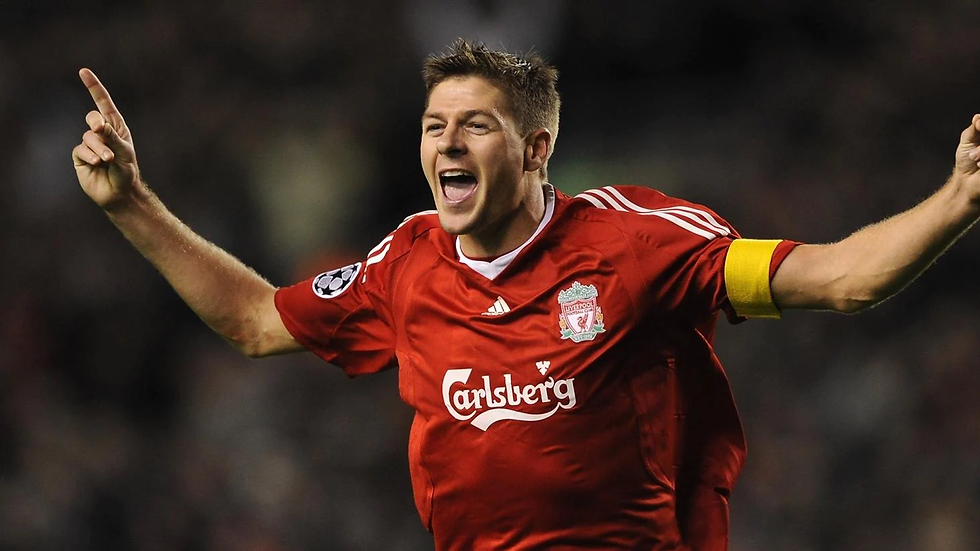
In football terms, we all like to brag about having won the same number of Premier League titles as Steven Gerrard. For us fans, we would give anything to have the same number of England caps as David Nugent, Francis Jeffers, and Kevin Davies. They all received one senior cap each, and may consider their international careers as failures. Would you give your left arm to play one game for England?
It's the same as a band like Wheatus potentially being jealous of the success of Blink 182, while a pub singer with an acoustic guitar is envious of Wheatus writing one massive hit. "I've made it." Does reaching it one time make you a success? Finishing last place in any Olympic event still makes you an Olympian. Being an un-used squad player in a World Cup winning team still makes you a World Champion, and where any of us would kill for a position as third-choice keeper for our national team, the actual third-choice keeper is likely sat there bored, criticising every mistake the number one makes, while also quietly thinking "and I'm better than number two, too!"
Think back to that Messi quote at the start. He was already acting like the greatest player in the world long before he became a World Cup and Champions League winner. Early starts, late nights, moving away from his family, taking risks, making sacrifices, working hard, being dedicated. As Jose Mourinho said; champions act like champions long before they are champions.
You don't suddenly become a champion the day you are handed the trophy. You become a champion the day you begin acting like one.
It demonstrates how we think about this all backwards. What does it take to be a champion? Fitness, recovery, nutrition, sleep, analysis, physiotherapy, intelligence, sport psychology, dedication, sacrifice - to over simplify the process. You don't win the league and then say "Right, that's it. I'm going to get up early and go for a run every day, and start eating right." The things that made you a champion, you would have already been doing for quite some time. This is the champion mindset.
I have written previously about how success is underwhelming. I thought getting a master's in coaching would change my life. Kids still didn't respect me. It's not like I could walk into a session where kids were misbehaving and then one of them says to the other "Hey, lads, let's calm down a bit. This coach has an MSc." I can't have an argument with a player and then whip out my diploma and have them say "fair enough, you are right, Coach." I've got names and experiences on my CV that I think are really cool. Got some great certificates. Other coaches give me compliments and write me references. But when a chubby year seven girl refuses to run in a 1k race at school, I can't go over to her and say "Look, I've coached on four continents." It will have zero effect.
Imagine a player doesn't agree with my instructions.
"I have a B licence!"
"A what?"
"UEFA B. And also USSF B. That's from America."
"So?"
They have to actually respect you and your knowledge. They need to trust you. You, as a coach, actually need to be good at what you do. You need to know your stuff, and be able to articulate it in a sensible, easy to convey manner. It doesn't matter what tracksuits you've previously worn, or the fact that John Terry was on your B licence.

In youth football, we often say "never become a kid's last coach." That means don't be the reason a kid quits sport. If they're showing up each week, that's a win. If the leave the session smiling, that's a win. If they complain when it finishes, that's a win. If they start bringing their mates along, that's a win. And if they're still playing the game ten years after you stop coaching them, that's a huge win.
The examples of Clough, Gazza, and Wheatus speak to legacy. What will your legacy be as a coach? As a human? I'd like to think that my former players think of me as a kind person. Maybe my jokes weren't always funny, but they appreciate that I tried to make them laugh. I gave lifts, I gave time, I gave advice. I was approachable, I was understanding, and I helped them keep playing during times when it became difficult. In futsal, I'm the one that provided the first opportunities for many players, for club and country. I have facilitated many first steps into futsal, allowing players to fall in love with the game. I have given several players their first start in the top division. I haven provided many players the opportunity to play for our club in a long list of countries in Europe and also Africa. This makes a list of personal achievements and unforgettable experiences. Whether we ever win the league or not, my players will have trained at PSV, played games live on TV, represented their country, and travelled to and scored goals in lots of wonderful places with wonderful people.
You see, the focus isn't on winning. It's on doing the things that allow us to win.
After many years of struggling for results in futsal, suffering ridicule and derision, I now have two senior teams that are doing well. Our men's team won one competitive game last season, yet now we are absolutely flying, beating teams we've never beaten before. Our women's team went one season without a competitive win, and now we're second in the table, after reaching the play-offs for the first time ever last season. This may be a flash in the pan, but it feels good now in the moment. The derision and ridicule has turned to praise and compliments. People that used to look down on us now ask us for advice. Those who saw us as outsiders now view us as leaders.
These are all extrinsic factors. Not the motivation for the hard work we put in, but instead a happy byproduct of it. You see, I haven't changed. My teams have a winning record now. I've got better players now. We are in a position to compete now. But I've been doing the same things for years. It just takes time for it to come to fruition.
What am I talking about? I get up early, I stay out late. I work too hard. I read too much. I analyse too much. I watch too many games. I have killed my social life. I have sacrificed so much family time. I am physically unhealthy because of all the damage coaching has done to my body. I don't even want to begin examining the mental damage - I'll deal with that when I retire - because I can't switch off. When I'm at work, on holiday, with the family, my mind is still racing. It never shuts up.
Remember, you define what winning is. Do you want to win more youth games to collect plastic trophies? Select only big and fast kids, and keep your weak players on the bench. Done. Want to win lots of medals as a player? Drop down a few levels and spank inferior teams. Done. How about sitting on the bench and never playing just so you can say that you played for X team or at Y level? Done. But who are you doing it for? Because much of that is to impress others and receive their admiration. Will it make YOU happy?
My point is, I may have a good record NOW, but I haven't always. My team that are now considered title contenders were once plucky also rans that were disregarded with a sympathetic laugh. What's changed? Not much. I'm still working hard. Our culture is still the same. My knowledge is better, and therefore training and tactics are better, but that's not the reason we're winning. We're winning now because we had years of failure. We learned what we needed to learn. We improved what we needed to improve. The losing gave us opportunities for introspection and reflection, but it was our team culture and individual attitudes that took the steps we needed to take.

In this context, I'm still a loser until I win something. I am winning, but I'm not a winner. Daily, weekly, yearly, I take the steps needed to win. For our women, we improved training, got new equipment to improve sessions, utilised analysis, built a reserve team, attracted better players, got some into various England pathways, developed one of the best U16 sides in the country, travelled across the continent to play top teams in different environments with different playing styles. We are not winners yet, but we are taking many of the steps that winners take. We're acting like winners long before we become winners. Each year we strengthen. Each year we move up the table. So when we do win, it will not be a surprise. It will be the next step.
Regarding Manchester United, much of the talk is not just about talent, but about attitude. "Back in my day, we had eleven captains on the pitch!" Each player seen as a leader, several players captains of their own national teams. This brought a level of determination, fight, and togetherness that would often claw victory from the jaws of defeat. They were perennial winners, known for not giving up. Modern Man United is known for players who are more sizzle, less steak. They are flash, but without steel. Anthony may have moved on, but can you imagine a previous Manchester United number seven that would be ridiculed and branded a "fidget spinner?"

I don't know Bruno Fernandes as a person, so can only judge him by what he demonstrates on the pitch. What we see is complaining, moaning, diving, pretending to be injured, arguing. This kind of behaviour is petty and short-termist. Dads on Facebook know better than this, as they post quotes like "Let the dogs bark, the lion is still the king" as a result of arguing with their neighbour over wheelie bin placement. What I'm saying is that such nonsense should be below the captain of one of England's greatest clubs. Instead, this leader is setting the tone, essentially promoting selfish and toxic behaviour. If you tolerate it, you condone it. And not only does Fernandes condone it, he promotes it.
Outcome is driven by process, process is driven by character. If you don't have good people, yeah you might win some games, but your long-term ceiling for success is lowered by your own behaviours. If you want to be the best and achieve consistent, long-term success, rather than random one-off achievements, you need to behave like winners all the time. You need to act like a winner long before you ever pick up that trophy.
It's true that anyone can win. Remember, you define what winning is. What I mean though is that life is full of people to have won things who are lazy, entitled, ungrateful, self-absorbed, workshy, unwilling to learn, and lack many of the qualities I have already stated throughout this article. These people, think of them in your life. Are they people that leave their comfort zone? Are they nice to be around? Do they put in extra work? Do they think long term? Do they have good organisational skills? Chances are, they don't win at a level that matters, and they probably won't do much winning long term.

Think of the academy kid who has bags of talent, but a terrible attitude. We know that unless they themselves change, that kid is going nowhere. They stay in their comfort zone, they don't put in extra work, they are almost offended by any attempts to improve them as a player. It's difficult to watch as a coach, seeing this same old story played out time and time again by players who think they know better. You may have colleagues, teammates, players like this. I was watching a kid recently who was the most talented on his team. But he was constantly arguing with the referee, shouting at and blaming his teammates, ignoring the coach, trying to foul opponents while he himself would hit the deck at the slightest bit of contact. It's a pretty safe bet to imagine that kid is going nowhere.
His teammates stopped running for him because they knew he would scream at them, leaving him to attack by himself. They passed the ball to him even when he was marked and better options were available, because they didn't want to be screamed at for not passing to him. Inevitably, when he lost the ball after receiving under pressure, he blamed his teammates. The coach gave him zero feedback throughout the game, as he had clearly given up trying long ago. The boy shot from every free-kick and corner, and constanty demanded the ball.
Some would call him competitive. I would call him a lost cause.
The reason I say that is because winning, consistently, over a long period of time, takes significant work. Becoming an Olympic gold medalist or world champion at anything, takes significant work. Winning an amateur or youth game may only require a few things, as it is one-off, low stakes, with few competitors. So working the referee or screaming at your teammates might be the thing that makes the difference in that moment. In that game. But if an athlete doesn't work on the bigger picture, what will make them a winner in the long run, then they're not a competitor, they're petty.
Youth coaches across the globe will bench the crap kids, stick the fat kid in goal, and boot it forward every chance they get, just to win a U9 league with eight teams in it. They won't teach their kids passing, receiving, dribbling. They will never learn to play out from the back. I'd be surprised if the keeper can even take their own goal kicks. Their insatiable need to win TODAY, at the expense of tomorrow, does not make them a competitor. Their motivations are extrinsic. It's about how they are perceived by others. They want to be a big fish in a small pond. That U9 Division Three trophy provides them with sustenance in the form of clout. They get the likes on Facebook, and any parent who complains about their kid only playing five minutes all season will be dismissed as "a loser" who "doesn't get it."
Why do these coaches never go on to work at academies? Because they'll be out of their depth. Why do they never go on higher level coaching courses? Because they'll be exposed. They'll face new ideas, criticism, and people that may make them feel inferior. So they stay in the goldfish bowl, wracking up plastic trophy after plastic trophy, lapping up the clout, but never achieving anything of note, and never making any real difference in the world.
A growth mindset is what separates winners from losers, not their trophies.

The best coaches want to be observed and to receive feedback. They will watch other coaches and other sports to look for new ideas. They will actively seek to be uncomfortable so that they can learn new things and incorporate these ideas. They will try things, experiment, and take risks. They will also do the hardest thing, which is introspection and self-reflection. A coach who blames the weather, the referee, the grass, luck, or other external factors, is not a coach you can learn from.
The best players arrive early, stay late, and look for extra opportunities to play and train. They actively seek feedback, and while nobody likes criticism, they will listen to it, rather than shy away from it. The best players will rise to the challenge, rather than go missing under pressure. The best players will dig in when the going gets tough. They will take a loss on the chin, learn from it, and look to implement those ideas in the next game. They don't avoid accountability, and they don't blame others.
They might not be the best yet, but their attitude will take them there. Good coaches will seek out opportunities where they are the least knowledgeable or experienced in the room. Good players will relish opportunities to play against those who are better than them.
In every country I've worked in, in every club, at every level, the players I have seen improve the most have done the following two things;
Extra work. Whether it is extra sessions, more gym time, private training, or training on their own, they have always found ways to do more. What's on your weekly timetable isn't enough. I often talk about a boy in St. Louis who, at thirteen, was in the middle of the group in terms of talent. For his fourteenth birthday, he asked for a bag and some balls, and would have his dad drop him off at the park for an hour several times a week. He'd work on shooting, dribbling, free-kicks. Nothing too complicated, just really making his fundamentals his strengths. By age sixteen, he was the best kid in his age group, and better than half the kids in the year above. He didn't do anything his other teammates couldn't have also done. You also won't be surprised to know that he watched several football matches per week, at a time when most of his contemporaries weren't watching any.
Ask questions. Good coaches love players who ask questions. Kids who have to be dragged away by their parents because training finished half an hour ago, and they won't stop talking about football. Ask about the game, ask about training, ask for feedback, ask for opinions on playing styles and philosophies. It shows a level of inquisition and curiosity that is fueled by their hunger and passion. If a player isn't curious about the game they supposedly love and want to play at a high level, you know they're not far from their plateau.
There's no magic pill, no secret drill. It takes consistent hard work.
Me? Maybe I'm not a winner. I just act like one.
Here's a list of habits found in winners;
Extra work
Train with intensity and purpose
Work even when they are tired or feel bad
They don't neglect the small stuff
They do the boring and unglamorous work
They look after their bodies regarding hydration and nutrition
They are dedicated, not missing training or games
They analyse game tapes
They lead and take responsibility
They put the needs of the team ahead of their own
They maintain focus
They do not sacrifice the long-term for short-term gain
They look for opportunities to leave their comfort zone
They find opportunities to be challenged
They make lots of personal sacrifices
They show up even when they don't want to
They lift up those around them
They are obsessed
If you don't do this, you're not a winner, you're just someone who likes winning. Like it's a preference, rather than a choice of habit. "We are what we repeatedly do."
Winning exacts a heavy toll, and it requires payment in advance.


Comments